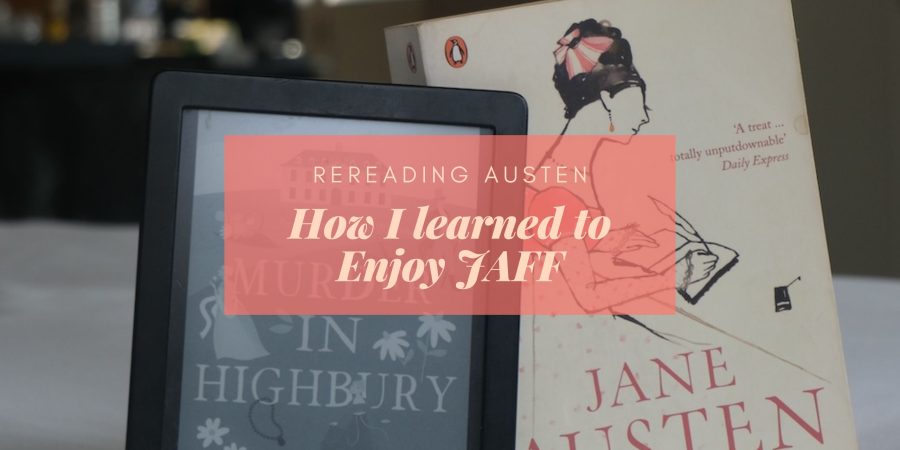
So I decided that it was time to reread Austen, because it’s always nice to go back to old favourites and because I thought it would be fun to reread her novels while listening to a course about her works. What I didn’t expect was to start reading more Jane Austen Fanfiction (JAFF) while doing so. And in doing so, I realised something about myself: whether or not I like the fanfiction depends on whether or not I agree with the author’s interpretation of the characters past the events of the novel.
For example, and to start with something a little off topic, when I was younger (like in Secondary School), I used to read Alex Rider fanfiction. I had a particular fondness for the stories where Alex had to live with the SAS team, which had a very big “found family” vibe (these were also the stories where Alex’s identity was revealed). But when I reread the books, I was shocked to realise that the characters on the page and the characters that I had come to know in the fanfiction were very different! I think the fact that they were minor characters meant that I wasn’t as clear with their characters and I could actually enjoy works that grew them out of their original roles.
Now, what does that have to do with JAFF? Well, I am, unfortunately, the type of person who remembers the impression of bad books longer than good ones. I took a look through the blog archives and after digging deep, I realised one of the first few JAFF books I read was The Bad Miss Bennet because the book changed the personalities of nearly all the characters. That’s actually a pretty constant pet peeve – I just DNF-ed Murder at Mansfield Park for the exact same thing, only to discover that a decade ago, I read and disliked the book for the same reason. The only difference is that this time, I had learnt to put the book down. Because of this, I always had the idea that I wasn’t much of a JAFF fan; if I read fiction related to Austen, it was mostly the novels that inspired her.
The first time that changed was when I read Unequal Affections. This is a variation of JAFF that considers what might have happened if Elizabeth accepted Mr Darcy’s first offer of marriage. As it turns out, I really enjoy reading variations – seeing how other people treat the “what if’s” of the Austen novels. For example, “What if Fanny Price married Henry Crawford?” (Austen gives us a tantalising hint through one paragraph but understandably did not develop it further).
That is how I realised that it’s not that I don’t gel with JAFF, I just prefer particular types – which happen to be the variations on plot. And for me to really enjoy the story, I prefer for the characters to stay as similar to what I remember. While it seems like Mr Darcy is more in love with Elizabeth that in almost every Pride & Prejudice story compared to the original (I’m not sure if I’m putting it correctly but he seems a lot more lovesick), it did a convincing argument of what might have happened if Elizabeth accepted Mr Darcy’s proposal and that’s what I enjoyed about it – it allowed me to stay in Austen’s world for longer, with characters I recognised from the books.
But I recognise this line of “what is recognisable” is murky and very personal. For example, I’m fine with Henry Crawford undergoing some sort of internal change and being a better man in the books because Austen had a paragraph that suggested that had he persevered, he would have won Fanny’s heart. So to me, you can write Henry as the reformed rake character and I’ll buy it. But on the other hand, I read a fanfiction titled “Murder in Mansfield Park” and didn’t like it because they changed Edmund’s parentage (and made him Mrs Norris’s son), they made Fanny the heiress and more crucially, they made her spoilt. They all felt like different characters, so I couldn’t buy the story, even if I liked the premise of a murder mystery in Mansfield Park.
On the other hand, I enjoyed Murder in Highbury, which is a murder mystery sequel to Emma. There are some things that are different, like Mr Woodhouse being very protective of his friends, but given that the other characters found it out of the blue, and knowing that Mr Woodhouse was always solicitous of his friends’ health, I could understand why the author did it, even if I didn’t quite think it was plausible. This is the part of fanfiction that I find fascinating; I think if we read the books enough and think about them enough, the characters come to life and grow in ways that they didn’t in the original novels and part of the whether we “click” with certain works is whether the author thought of the characters in the same way.
I also noticed that the differences between the original and fanfiction are bigger when you’re toggling between fanfiction and the original novels. I was reading Murder in Highbury while reading Emma and the style of the fanfiction felt a lot more modern, even if the author clearly loves the work. Austen’s free indirect discourse is hard to imitate, as I’ve learnt from reading others!
And this is the story of how I came to love JAFF, and learnt more about why I liked or disliked certain types of fanfiction. It’s also why I find it hard to give star ratings for them – when you’re playing in another author’s sandbox, why I like or don’t like the book is based on my relationship with the original work, and not just purely on plot and prose.