
Over a decade ago, I read Crazy Rich Asians and thought it was rather meh. Not because rich people’s antics aren’t fun (if they weren’t, I wouldn’t have watched so many Taiwanese and Hong Kong dramas when I was younger), but because I wasn’t a fan of the female protagonist.
But this year, I found out about the real Crazy Rich Asians, who during the transition from the Qing dynasty to the modern Chinese state, around the turn of the 20th century. While I wouldn’t have liked to be in the same room as many of them, they are all fascinating, protagonist-worthy figures (probably why we never saw them becoming best friends). They were the ultimate social climbers, they ruled (directly or indirectly), and they set fashion trends. And today, I want to introduce you to these real Crazy Rich Asians and point you in the direction where you can read more about them as well.
Cixi – The Ultimate Social Climber
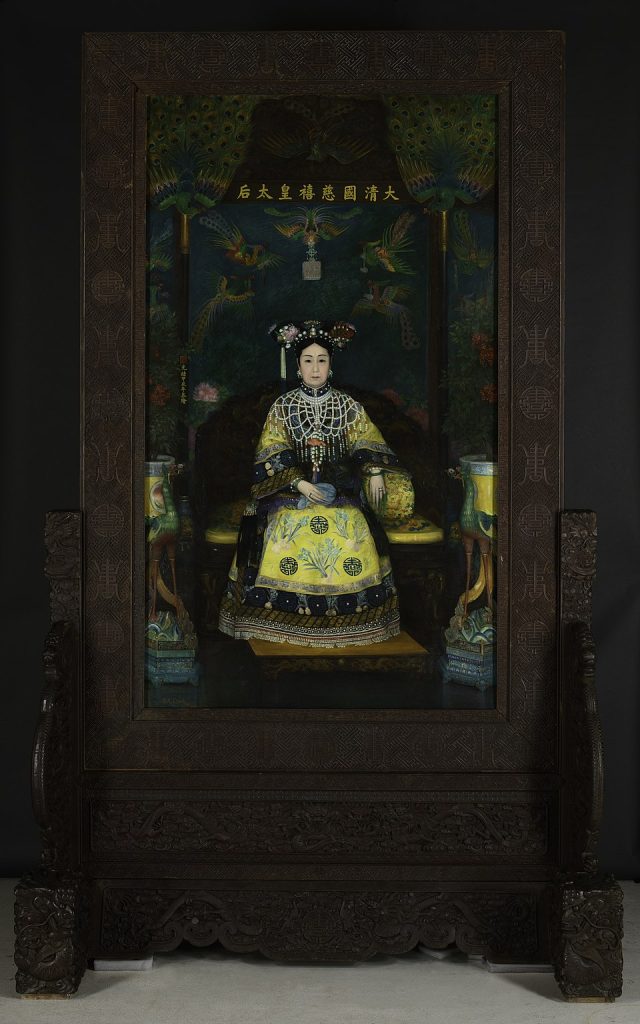
Most people remember Cixi as the dowager Empress who presided over the last years of imperial China, but did you know she was not born into royalty? Although she was a Manchu (who, ironically, was not taught Manchurian), she was born into a family of government employees.
From a young age, Cixi was smart and resourceful. When the desperate Emperor Daoguang fined his officials to make up for losses in the state treasury, thereby nearly bankrupting the family and landing her grandfather in jail. Cixi stepped in. She took on sewing jobs to raise money and gave practical suggestions – what to sell, who to approach loans from, and even how to get a loan. Thanks to her ideas, the family raised enough money to have her grandfather released, and her father paid her the following compliment: ‘This daughter of mine is really more like a son!’
Likewise, in the palace, Cixi was resourceful. She started out as the 6th of the 8 possible concubine ranks but became fast friends with Empress Zhen, who helped her win favour with the emperor. The two of them were famously good friends and there was never any rivalry between them – in fact, the coup was planned by both of them!
While her political legacy is troubled and there is dispute about what kind of woman she was, it’s clear that Cixi was the ultimate social climber, going from daughter of a civil servant to empress Dowager and regent over China.
Der Ling – The Proto-Influencer
The “Princess” Der Ling, as she styled herself, can also be called a social climber but I prefer to think of her as a proto-influencer, given the way that she marketed herself after the fall of the Qing dynasty.
Born to a Chinese-American mother and Hanjun father (Her father was Han and belonged to the Chinese Martial Plain White Banner), Der Ling was given a cosmopolitan upbringing, from her years in Japan, where – at a sakura-viewing party- she pushed her way in front of the Belgian minister (Baron d’Anethan) to get a better view of the Emperor and Empress of Japan, to her dance lessons with Isabella Duncan when the family moved to France.
After returning to China, Der Ling and her family served at Cixi’s court for two years, and from that experience, she launched her career. She wrote books about what it was like working for Cixi, claimed she and her sister were granted titles, and spent years travelling around America to talk about her experience.
But although she sounds like someone who just wanted fame for fame’s sake, Der Ling did care for her country – during WWI, she volunteered with the Chinese Red Cross. While still in Beijing, she helped planned a charity bazaar to raise funds for Chinese famine victims. She was also the chairman of the Rice Bowl Festivities in America, which helped raise funds for the Chinese War Relief Association.
Oei Hui Lan – The Fashionable Modern Woman
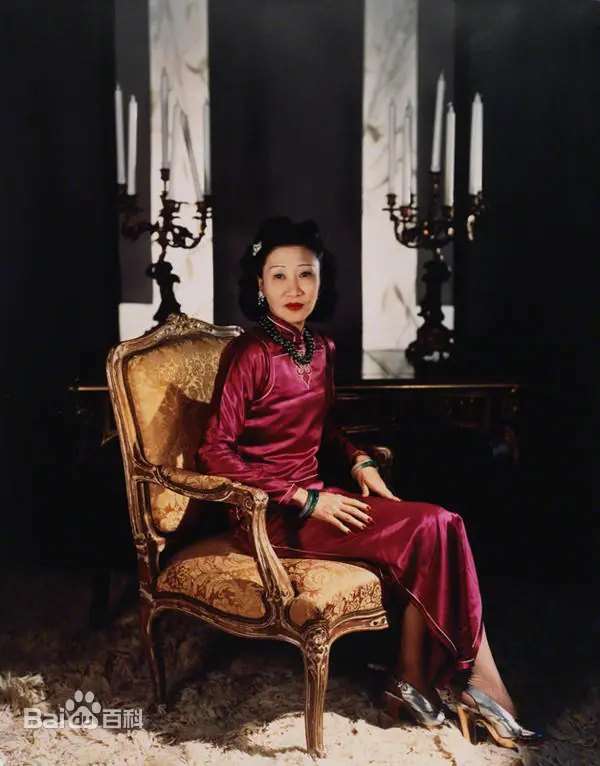
Oei Hui Lan may be better known as Mrs Wellington Koo, but she was a force in her own right. Born in 1889 to the wealthy Oei family (who erm, made their wealth via opium and sugar – so the money was sweet but not clean), she was raised in a “great estate in the hills of Tjandi” and reportedly so spoiled that she even bit her nannies in submission. It was, perhaps, for the best that her mother insisted on hiring Ms Elizabeth Jones, a strict British governess who stopped her outburst and raised Hui Lan and her sister to be proper ladies. They even gave themselves titles when they lived in England for a little while, and Hui Lan was likely mixed up with “Princess” Der Ling as a newspaper article described her as a “lady-in-waiting to the late Dowager Empress of China.”
When Hui Lan married at the age of 19 to Beauchamp Forde Gordon Caulfield-Stoker, a man who was 12 years her senior, Hui Lan’s father, Tiong Ham, bought over a London sugar dealer, FC Grein, renamed it Kian Gwan Western Agency, Ltd and made Beauchamp director of the company so that Beauchamp could provide for Hui Lan. However, the marriage didn’t last and Hui Lan soon stunned society in two ways.
The first, on 14 May 1919, was when she obtained permission to fly a plane at the Handley-Page, making her the first Chinese woman to fly a plane (and probably one of the first few women!)
The second was, when in the same year, she filed for divorce from her husband.
Shortly after, Hui Lan met and married Wellington Koo, who was respectable and had a good status, something Hui Lan’s mother and sister thought she needed in the wake of her scandalous divorce. Even so, Hui Lan was not convinced and she had to be talked into the married by the Chinese contingent from the embassy.
Reluctance aside, after her marriage to Wellington, she ended up supporting him in very real and tangible ways. She bought a 17th century palace in Shanghai to serve as their home, hosted cocktail parties to stay in touch with the foreign community and understand how people were viewing events in China, and even won over the Young Marshall (Chang Hsueh-Liang) when he and a friend barged into her hotel with a revolver and demanded to see her. Later on, in Wellington’s career as a diplomat for China, she helped to renovate the embassy and manage the visit of the notoriously difficult Soong May Ling.
Her fashion sense saw her adapting the loose Manchu gowns, adding a slit and shortening it. Over time, she altered the gown’s length, fit, and sleeves, thus helping to create and popularise the cheongsam.
Oei Hui Lan may have been born into wealth but she didn’t just fritter her privileges away. Instead, she took her keen sense of style and turned it into an asset as diplomat’s wife, using her family money to promote the image of China around the world.
Soong May Ling – Socialite, Politician, Diva
Soong May Ling and Oei Hui Lan shared a lot in common – they were savvy, well-educated women who moved in the highest political circles and had an influential sense of style. At the same time, when you drill down into the details of their lives, you’ll see that they were two completely different women.
Born in 1898 in Shanghai, May Ling left China at the age of 10 and enrolled in Wesleyan college in 1908. This upbringing in the US polished her wit and gave her a Southern accent that she would use when charming money out of governments.
In 1927, she married Chiang Kai Shek, despite the fact that he had already been married twice and had a concubine (the story is a lot more complicated than this and I would highly recommend reading the biography mentioned below) and she was raised in a Christian household. As Chiang Kai Shek did not speak English, May Ling (who spoke it fluently, having lived in the US), was his interpreter. Together with the rest of the Soong family, they fought for China through the second World War. One of Kai Shek’s goals was to convince the US that he needed more military hardware in order to hold the line against Japan, and:
“To underscore her husband’s campaign, May-ling wrote an article for The New York Times Magazine in which she divided the relationship between East and West into three stages: first, the historical exploitation of China, a policy that had left the Chinese scornful of the “power-worshipping” West; second, the invasion of China by Japan, during which the West had acted like “spectators at a college football game cheering from the safety of the stand while taking no personal risk in the game themselves” ‘; and third, the early years of World War II, during which the West had “felt the shattering impact of Japan’s might,” to which it had bowed, while, according to Madame Chiang, there had been “no instance of Chinese troops surrendering to the enemy” in the past five years!”
Smart, educated, and according to Gardner Cowles “one of the most beautiful, intelligent, and sexy women either one of us [he and Wendell Wilkie] had ever met”, May Ling was a force that toured around the US helping to raise support and money for Chiang Kai Shek’s government, but also terrorising the people who worked under her with her high demands. Reportedly, when Winston Churchill arrived in Washington in 1943, she expected him to come to her. Her nephew, David, told Ambassador Wellington Koo that “as a Lady, Mme Chiang should be called on by Churchill, and as a statesman, she could meet him only half way” [i.e. at Hyde Park].
May Ling was, to put it simply, larger than life. And while I’ve only had time to talk about her, her sisters, too, were deeply involved in the policies of early modern China (one sister, Soong Ching Ling, married Sun Yat Sen). As authors Pearl S. Buck described them:
“Madame Kung is the practical one of the three [sisters]. Madame Sun the extreme idealist, Madame Chiang is both, and in this sense, the greatest of them all.”
Conclusion and Reading List
There are many other formidable women who lived through the period between the end of the Qing dynasty and the start of early modern China. For example, I haven’t had time to look into the lives of Rong Ling (Der Ling’s sister), or do a deep dive into Soong Ching Ling or Soong Ai Ling (maybe that could be a Part 2? Or perhaps a more detailed post to come!). Still, I hope that you managed to learn more about these fascinating women and are keen to read more about them. If you are, here are some books that I recommend:
- Manchu & Han by Edward Rhoads: For background reading on who the Manchu were and how they ruled China
- Empress Dowager Cixi by Jung Chang: This is a controversial book, as Jung Chang doesn’t always follow the conventional view of Cixi, but she used a lot of primary sources, including imperial decrees. I found this interview with the author helpful.
- Two Years in the Forbidden City by Der Ling: Because it’s just fun to read what Der Ling says about Cixi and her time there.
- Imperial Masquerade by Grant Hayter Menzies: Der Ling is not always the most reliable narrator and I found this biography by her to be helpful in filling in the gaps of her life that she didn’t tell us and correcting some of the errors she made.
- As Equals: The Oei Women of Java by Daryl Yeap: Written by one of Tiong Ham’s descendants, as equals talks not just about Hui Lan but other members of her family. If you wanted Crazy Rich Asians in the Southeast Asian sense (like the novel), this is the book to read.
- The Last Empress by Hannah Pakula: If you’re wondering just how complicated things were behind the scenes of the early modern Chinese government, The Last Empress will show you how. This could almost be a drama and the Soong family would be in the center of it all.
Featured Image: By Yu Xunling, Court Photographer https://en.wikipedia.org/wiki/John_Yu_Shuinling – Own work (My book), Public Domain, https://commons.wikimedia.org/w/index.php?curid=2680656
P.s. Xunling is Der Ling’s brother!!
To be honest, I totally agree about the book. Though I actually liked the movie more.
Fascinating how you describe Der Ling as an influencer and it seems she really made a living from that. You mention the criticism about her perhaps aspiring fame for fame’s sake, though I also like how you’re trying to see things from a more positive perspective.
So cool that you did all this research about the real crazy rich Asians. I have to say, I’m really impressed. You manage to find some very interesting topics and you take the time to do those topics justice. I very much appreciate that. So thank you for writing this, Eustacia.
I thought the movie was more enjoyable too!
Der Ling is interesting – she def would have been an influencer (or wannabe influencer) if she lived now. She really hustled in a way I don’t think the other three did (not saying they didn’t work hard, it’s just something about her energy reminds me of hustling more than just pure hard work)
This was amazing. I liked Crazy rich Asians books but it would be even better to read about real crazy rich Asians.
Thank you! Definitely check out some of the biographies – I think the Cixi one was eyeopening, and The Last Empress (Soong May Ling) has a lot of political drama!
Wow, this was absolutely fascinating!!
Thank you! I’m glad you enjoyed it!
[…] The REAL Crazy Rich Asians – This is another post born out of conversations. Originally, I was planning to write this as Hanfugirl put out her podcast episodes on the same topic, but the podcast got delayed indefinitely so I decided to go ahead and write this before I forgot everything that I learnt. […]