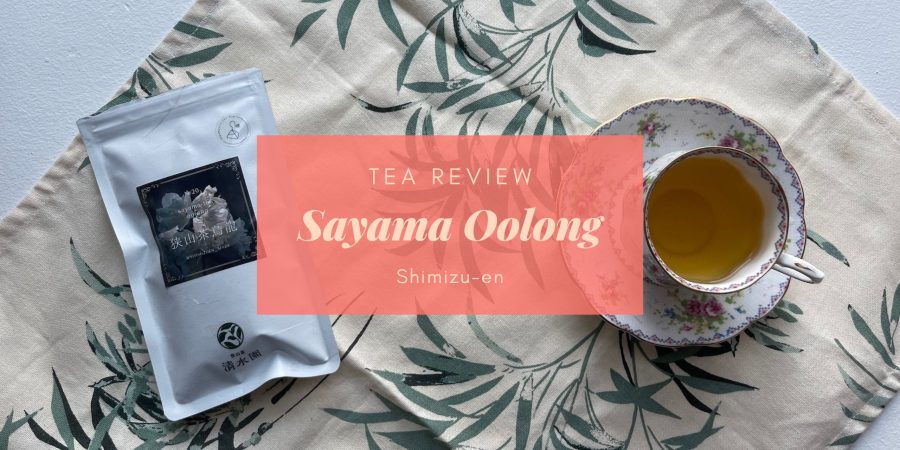
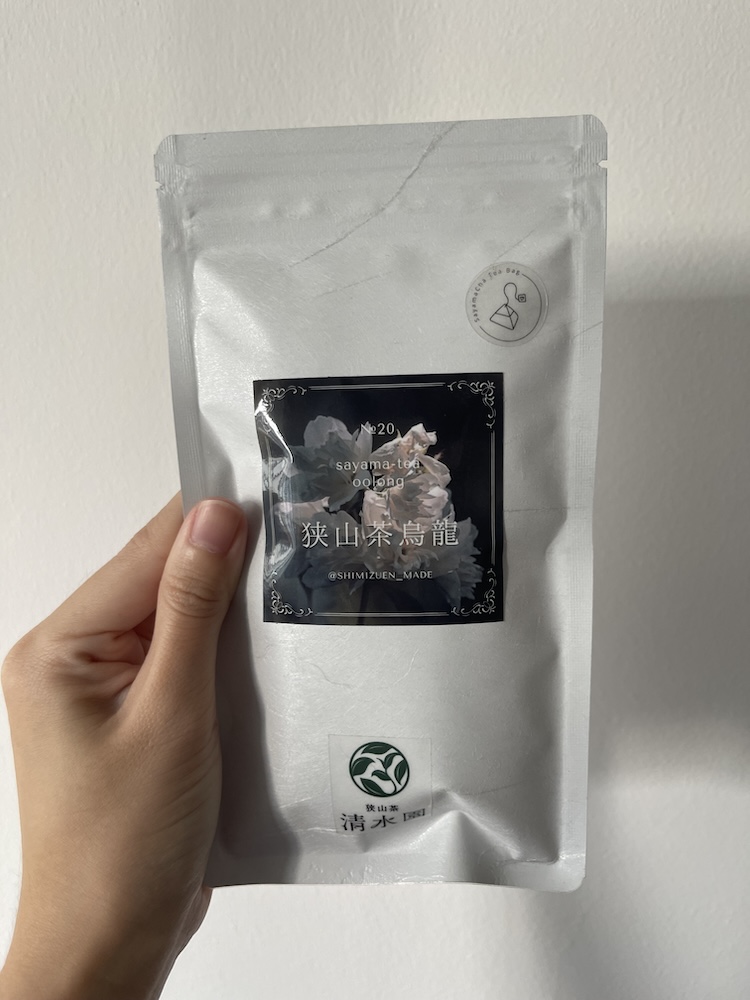
It has been far too long since I wrote a tea review, but I decided to start this year by opening one of the teas that I’ve been saving since my trip to Japan last year. This is an interesting tea because it’s an oolong – not very common in Japan – and I had high hopes for it because it also comes from Shimizu-en, which makes some of my favourite wakoucha/Japanese black teas.
First Impressions
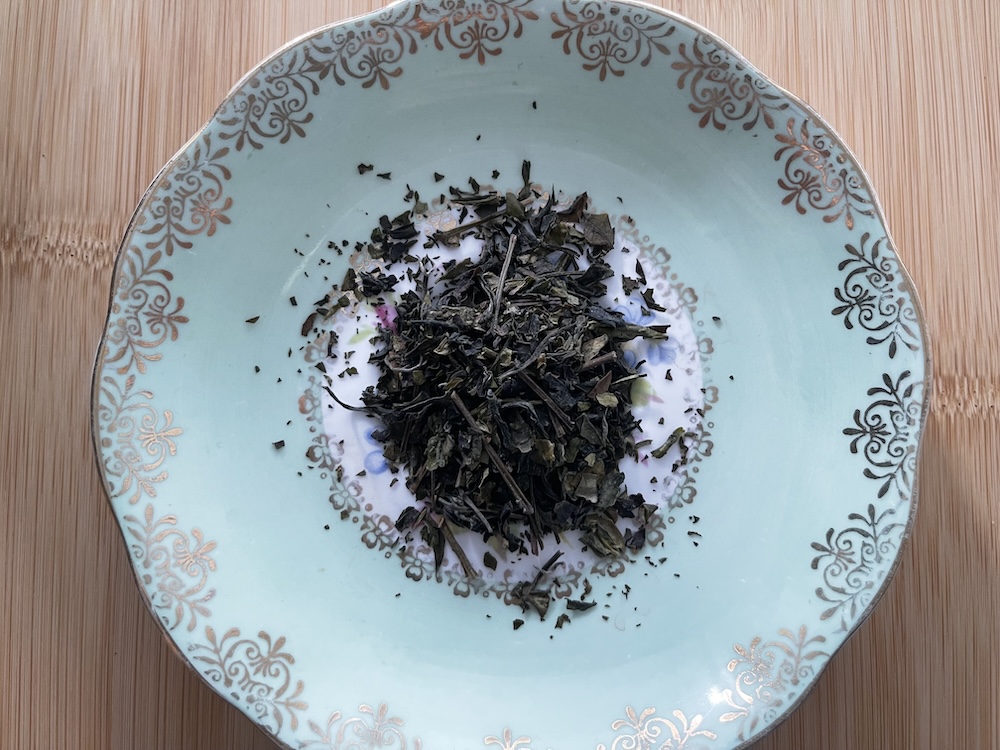
Because this is a teabag tea, the leaves are a mix of long stems and crushed leaves. From the description, this is supposed to be made with second flush tea, so I’m not too surprised that it looks to be from bigger leaves. The dry leaves smell a bit fruity to me.
Tasting Notes
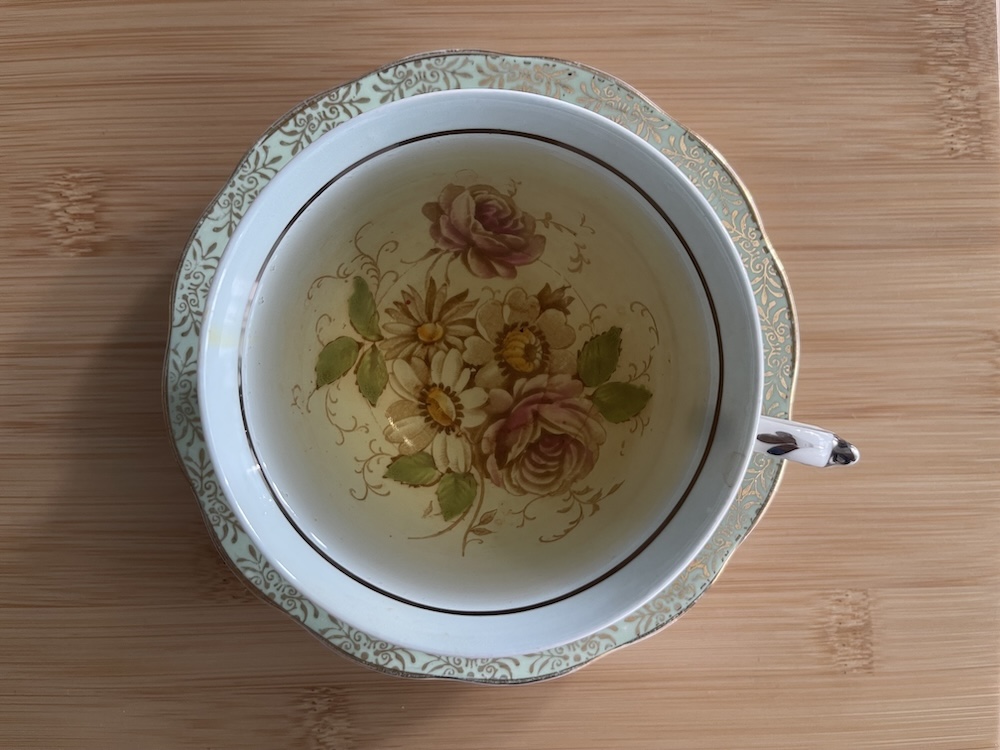
The first cup of tea (steeped for about one minute) had a light yellow tea liquor which smelled floral, similar to the black teas that Shimizu-en makes. Perhaps I didn’t steep the tea long enough because it had a bit of a woody note that gave way to a floral sweetness. The floral sweetness reminded me of a Milanxiang Oolong that I tried recently – that was another naturally sweet oolong.
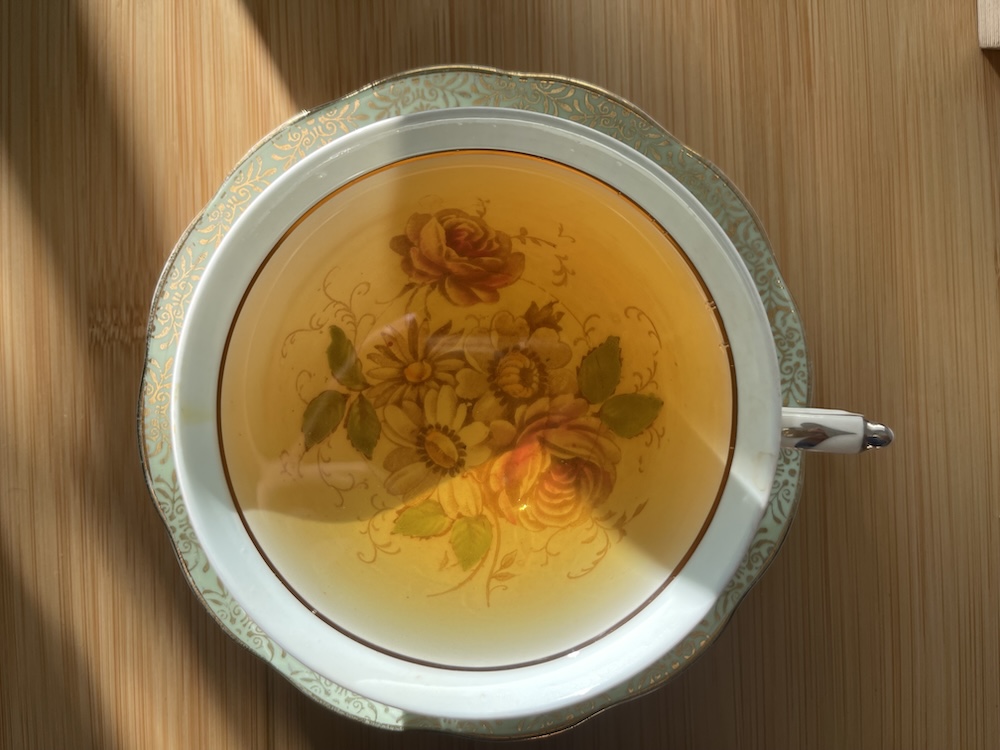
I steeped the second cup for a bit longer so it had a slightly deeper golden tea liquor (the light was also amazing at this point), but while there was a nice floral smell, the tea was not as sweet and the notes were not as distinct as the first cup. As the third cup was really week, I concluded that this tea is more of a one-steep tea rather than one that works well with multiple steeps.
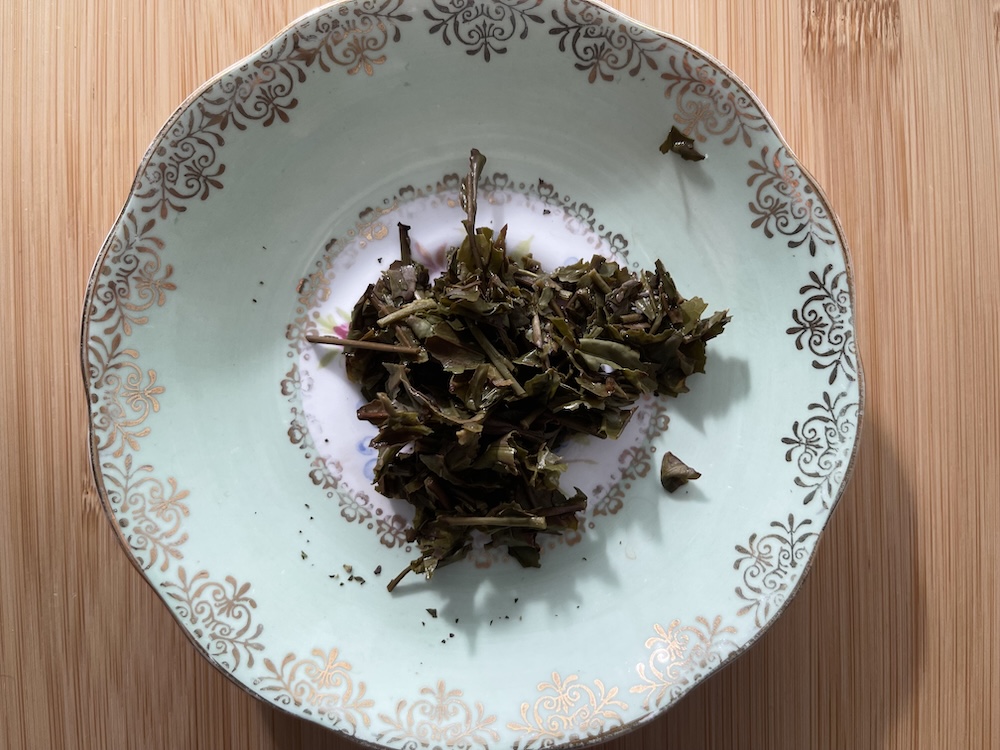
Interestingly, the spent tea leaves looked really green, more like a green than roasted oolong.
Overall Thoughts
As expected from Shimizu-en, this tea was sweet and floral. With a shorter steep, I could see a resemblance to their black teas, but with a longer steep (and in the teabag instead of cutting the teabag to use a tea maker, as I did with my first session because I wanted to look at the leaves), the tea tasted like a fairly typical light-roasted oolong. I didn’t really see a particular cultivar named, so I guess it’s made with a mix of cultivars. I think the last Japanese oolong I remember drinking was Sanpin cha, which is jasmine flavoured, and I think there’s a tea farm in Kumamoto that does oolong, so if I have the chance, I would definitely like to try more Japanese oolongs and see what type of range there is.